
Sant Antoni, Barcelona: A Local's Neighborhood Guide
Sant Antoni sits just west of the Raval, quietly doing what a lot of Barcelona neighborhoods claim to do but few pull off: staying genuinely lived-in while getting steadily more interesting to visit. It has none of the postcard density of the Gothic Quarter, but it has a 19th-century iron market, a Sunday ritual that's run since the 1930s, and a single street that captures the entire neighborhood's split personality.
A Neighborhood Named for a 15th-Century Convent
The name traces back to the convent of Sant Antoni Abat, built in the 15th century near what were then Barcelona's medieval walls. The neighborhood grew up around it as the city expanded outward in the 19th century under Ildefons Cerdà's Eixample plan, which called for new markets to serve the growing population beyond the old walled center. That's how Sant Antoni got its defining landmark.
The Mercat de Sant Antoni: An Iron Giant, Rebuilt from the Ground Up
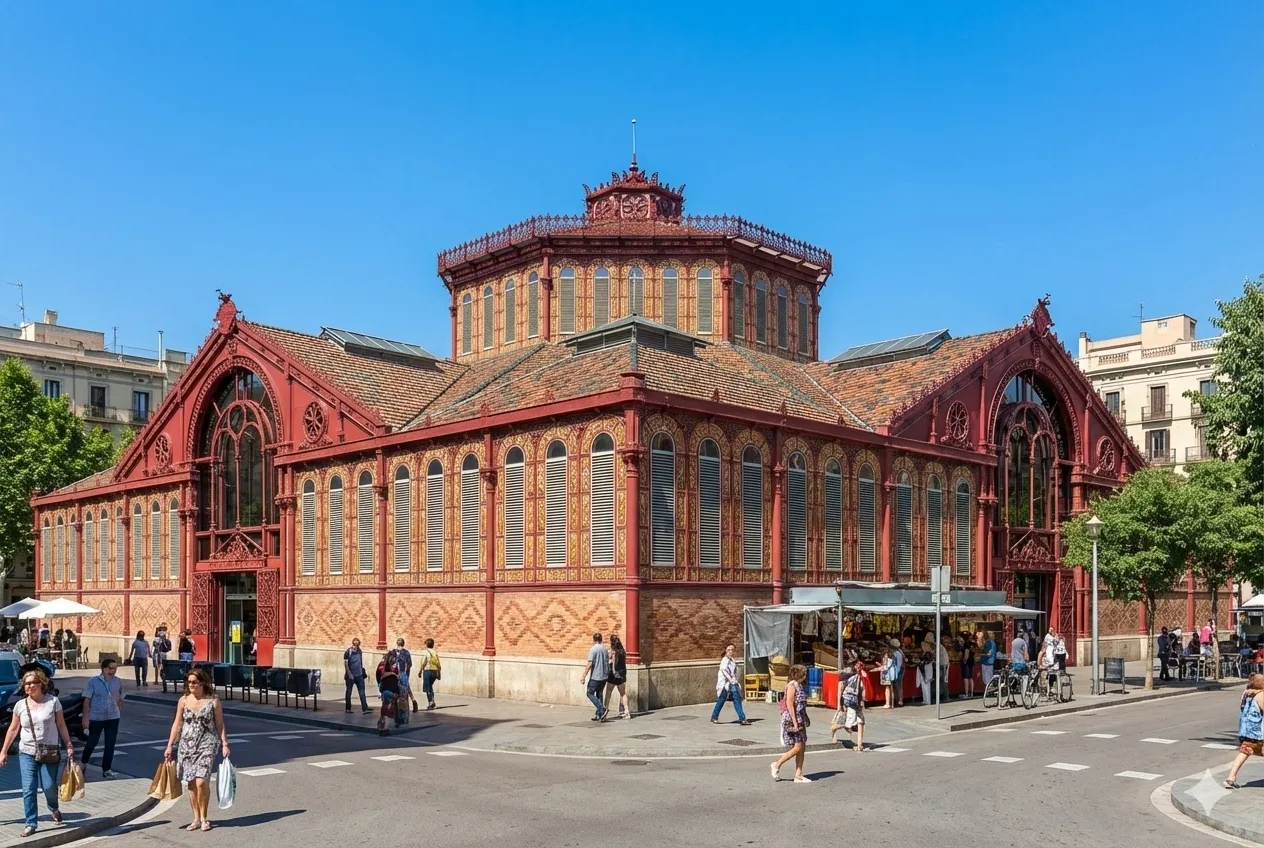
The Mercat de Sant Antoni opened in 1882, designed by municipal architect Antoni Rovira i Trias and built by La Maquinista Terrestre i Marítima. Its cross-shaped iron structure, with geometric ironwork on a genuinely huge footprint, made it one of the standout Modernista-era markets of the Eixample expansion.
In 2007 the market closed for what turned into an eleven-year renovation, led by architects Pere Joan Ravetllat, Carme Ribas, and Olga Schmid. During the works, crews uncovered actual remains of Barcelona's old city wall beneath the market floor — remains you can now walk past via an underground passage. The market reopened in 2018 with its original Modernista structure preserved above ground and four new underground levels of modernized facilities below it.
The Sunday Ritual: A Book Market Running Since 1936
Every Sunday from 8:30 AM to 2:30 PM, the streets around the market fill with more than 70 stalls selling secondhand books, comics, postcards, records, coins, and stamps — the Mercat del Llibre d'Ocasió. It split off from the Fira de Bellcaire and settled here in 1936, and it's been a fixture ever since, drawing writers and browsers alike to pick through crates of old paperbacks and vintage ephemera.
Carrer del Parlament: Sant Antoni's Split Personality on One Street
If you want to understand Sant Antoni in a single walk, take Carrer del Parlament. It's a short street, only a few blocks long, but it's become the axis of the neighborhood's gentrification: on one stretch, 19th-century bodegas still pour bulk wine under fluorescent lights, and on the other, natural wine bars and artisanal bakeries have moved in. Bar Calders, a corner café known for tapas and a sheltered terrace, is one of the street's most popular spots, alongside Els Sortidors del Parlament, a sophisticated bodega built inside a former motorcycle workshop.
Do's and Don'ts in Sant Antoni
- Do: Time a visit for Sunday morning specifically for the book market — it doesn't run the rest of the week, and the browsing crowd is part of the experience.
- Don't: Judge the whole neighborhood by Carrer del Parlament's trendier end. A block or two away, Sant Antoni is still a working, residential district, and it's worth wandering beyond the one famous street.
Frequently Asked Questions
What is Sant Antoni known for?
Its centerpiece is the Mercat de Sant Antoni, a Modernista iron market from 1882 that reopened in 2018 after an eleven-year renovation. The neighborhood is also known for its Sunday secondhand book market, running since 1936, and for Carrer del Parlament, a short street that's become the center of local gentrification.
When is the Sant Antoni book market open?
Every Sunday from 8:30 AM to 2:30 PM, with more than 70 stalls selling secondhand books, comics, postcards, records, coins, and stamps around the market building.
Why was the Mercat de Sant Antoni closed for so long?
It closed in 2007 for a renovation that ended up taking eleven years, reopening in 2018. During construction, crews discovered remains of Barcelona's old city wall beneath the market, which are now visible via an underground passage alongside four new levels of modernized facilities.
What is Carrer del Parlament known for?
It's a short street that captures Sant Antoni's contrasts: traditional 19th-century bodegas on one end and newer natural wine bars and artisanal bakeries on the other. Bar Calders and Els Sortidors del Parlament are two of its best-known spots.
Where does the name "Sant Antoni" come from?
It comes from the convent of Sant Antoni Abat, built in the 15th century near Barcelona's medieval walls. The neighborhood took shape around it as the city expanded under Ildefons Cerdà's 19th-century Eixample plan.
Final Thoughts
Sant Antoni doesn't perform for visitors the way some Barcelona neighborhoods do. Its identity is genuinely built around a market that took eleven years to rebuild, a book fair that's outlasted nearly a century of change, and a street where the old and new versions of the neighborhood sit a few doors apart. Spend a Sunday morning here and you'll understand it faster than any list of sights could explain.