
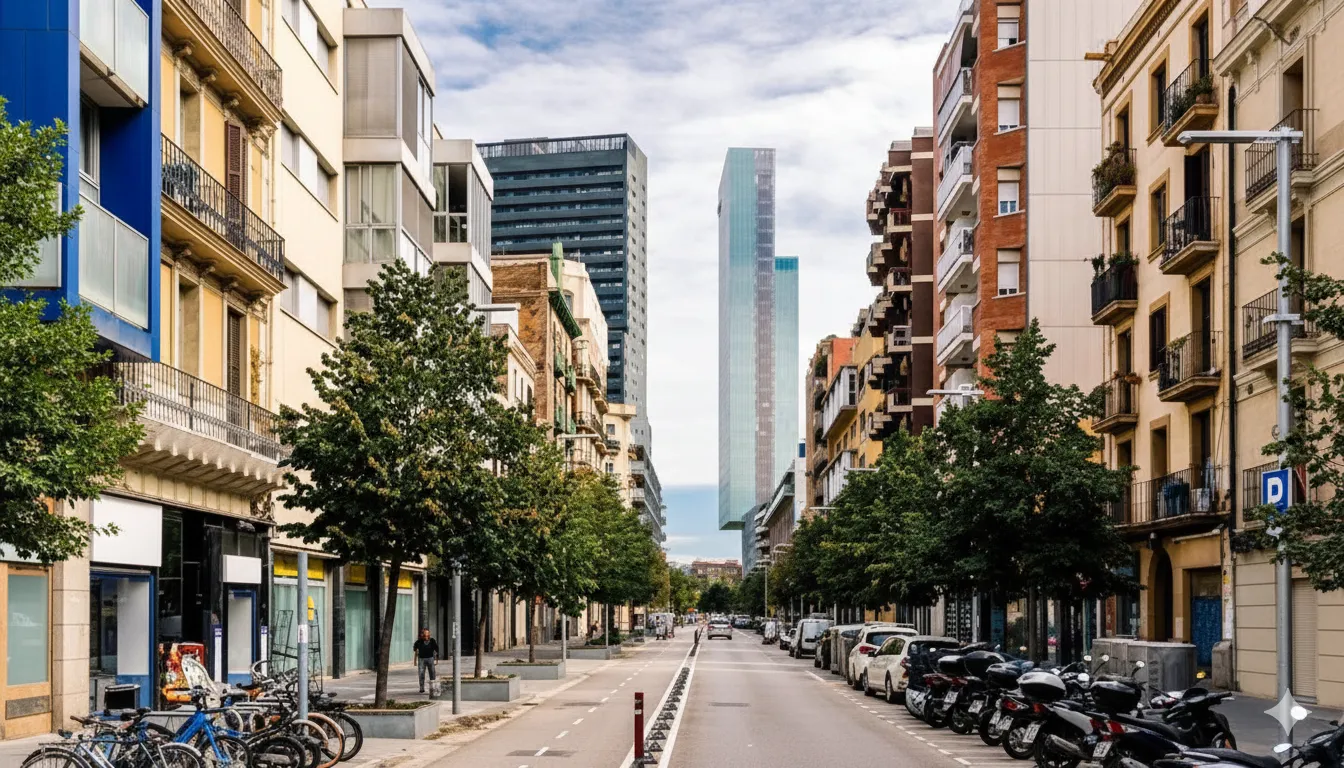
Poblenou, Barcelona: From Factory District to Street Art and Design Guide
Poblenou spent the late 19th and early 20th centuries as the industrial engine of Barcelona, earning the nickname "the Catalan Manchester" for its dense cluster of textile factories and smokestacks. By the 1960s, that industry had largely moved on, leaving the district's brick mills empty. What's replaced it since is one of the more unusual neighborhood transformations in the city: a still-standing industrial skeleton now filled with tech companies, design studios, and murals commissioned by the very businesses that moved into the old factories.
From Factories to 22@: How the Transformation Happened
The 1992 Olympics gave Poblenou its first major push, revitalizing the waterfront and clearing the way for further redevelopment. The real turning point came in 2000, when Barcelona's city council launched the 22@ District, a plan to convert roughly 200 hectares of Poblenou's industrial land into an innovation district for technology, design, and media companies. The initiative earmarked $230 million to seed the effort.
The results are hard to miss on the ground today: more than 3,500 businesses have relocated into 22@ since 2000, employing close to 100,000 people, and the neighborhood's resident population has grown by nearly 25% as workers and new residents moved in around them. In 2006, the city council added 114 industrial buildings and complexes to Barcelona's official Heritage Catalogue specifically to preserve Poblenou's industrial memory as the redevelopment continued -- which is why you'll still see 19th-century brick chimneys standing directly next to glass office towers rather than being cleared for them.
The Street Art: Commissioned, Not Just Tolerated
Poblenou's street art scene works differently from most cities'. Much of the fresh graffiti and large-scale murals you'll find here aren't guerrilla work painted overnight -- they're commissioned by the design, energy, media, and research companies now headquartered in 22@, often from well-known local artists like El Pez and Sixeart. The result is a district where corporate office parks and vivid, large-format street art sit on the same block, sometimes on the same building.
Where to look: The murals cluster most densely around the streets closest to Rambla del Poblenou and the newer 22@ office blocks, changing over time as buildings get repainted or redeveloped -- part of the appeal is that the outdoor "gallery" here is never quite the same walk twice.
Disseny Hub Barcelona (DHUB): The Design Museum
If Poblenou's street-level design culture makes you want the fuller story, the Disseny Hub Barcelona covers it indoors. This is the city's design museum, spanning fashion, graphic design, product design, and decorative arts.
Practical Information:
- Admission: €6.20 general, €4.20 reduced
- Free entry: Sunday afternoons from 3:00 PM to 8:00 PM, the first Sunday of every month, and on Barcelona's Santa Eulàlia (February 12) and La Mercè (September 24) open days
- Hours: Tuesday to Sunday, 10:00 AM to 8:00 PM; closed Mondays (except public holidays), January 1, May 1, June 24, and December 25
- Also included: Free with the Barcelona Card
Palo Alto Market: The District's Signature Market
A handful of times a year, the former Palo Alto industrial complex on Carrer dels Pellaires opens its doors for the Palo Alto Market Fest, a weekend-long market mixing design, fashion, food trucks, and live music inside a genuinely industrial setting -- a former factory complex, not a recreation of one. It's a useful way to see Poblenou's industrial-to-creative pipeline in miniature: the same brick buildings that once housed manufacturing now house independent designers' stalls.
2026 dates: September 5-6, October 3-4, November 7-8, November 21-22, and December 5-6. Tickets go on sale online starting the Monday before each edition.
Getting Around
Poblenou is well served by the L4 metro line (Poblenou and Llacuna stations sit right in the middle of the neighborhood), and the district is flat and walkable, making it easy to wander between the street art, the 22@ office blocks, and the beach at the district's southern edge without much backtracking.
Frequently Asked Questions
Why was Poblenou nicknamed "the Catalan Manchester"?
Because of its dense concentration of textile factories during its industrial peak in the late 19th and early 20th centuries, before that industry largely relocated out of the city by the 1960s.
What is the 22@ district?
A Barcelona city council initiative launched in 2000 to convert about 200 hectares of Poblenou's former industrial land into an innovation district for technology, design, and media companies. Since then, more than 3,500 businesses and nearly 100,000 employees have moved in.
Is Poblenou's street art official or illegal graffiti?
Much of it is commissioned rather than guerrilla work -- companies based in the 22@ district often commission well-known local artists like El Pez and Sixeart to paint murals on their buildings.
How much does the Disseny Hub Barcelona cost?
General admission is €6.20 (€4.20 reduced), with free entry on Sunday afternoons from 3:00 to 8:00 PM, the first Sunday of each month, and on Barcelona's Santa Eulàlia and La Mercè open days.
When is the Palo Alto Market held?
It runs a handful of weekends a year rather than continuously. In 2026, editions are scheduled for September 5-6, October 3-4, November 7-8, November 21-22, and December 5-6.
Final Thoughts
Poblenou is one of the few Barcelona neighborhoods where you can trace an entire economic transformation just by looking at the buildings: 19th-century brick chimneys preserved deliberately, corporate glass towers built around them, and murals commissioned by the tech companies that moved in between. It rewards a slow walk more than a checklist of sights -- the district changes block by block, and a lot of what makes it interesting is exactly that friction between what it used to be and what it's becoming.